

What you can do with this tool
- Check what your riyals are worth today: type any amount and see the rupees at the live rate.
- Plan a transfer home: know what will arrive before you send it.
- Compare transfer services: the fee plus the rate is the real cost — check two or three before a big transfer.
- Watch the rate over time: a 1% move on 10,000 riyals is real money.
Rates move every day — and the rest of this guide shows you how the peg works and how to get the best deal.
Use the free SAR to INR Converter: type any riyal amount and get the exact rupees instantly at the live rate — open the converter →
📌 Key takeaways
- The peg does the work: The riyal is fixed at 3.75 per US dollar, a peg that has held since 1986.
- Two steps to the rate: The SAR to INR rate is really the USD to INR rate divided by 3.75 — watch the dollar–rupee rate and you are watching your riyals too.
- A small move is real money: On a transfer of 10,000 riyals, a 1% move in the rate changes the rupees received by about 1% of the total.
- Compare the total cost: Check fee plus exchange rate across two or three services before every large transfer, not just the first time.
💱 SAR to INR — at a glance
The key numbers from this guide, in one place.
Saudi Arabia hosts one of the largest Indian expatriate communities in the world, and the money they send home — remittances — runs into billions of dollars a year. Every one of those transfers is a SAR to INR conversion: riyals earned in Riyadh or Jeddah become rupees in a bank account in Kerala, Uttar Pradesh or Telangana.
This guide explains how the exchange rate is set, why it moves, and how to avoid losing money to bad rates and hidden fees. It never quotes a fixed rate — rates move every day, and the live converter on this site always shows the current one.
1What is SAR to INR?
SAR is the Saudi riyal, the currency of Saudi Arabia. INR is the Indian rupee, the currency of India. The SAR to INR rate tells you how many rupees one riyal buys — the number you need when you send money home, pay for something in India from a Saudi account, or work out what your Saudi salary is worth in rupees.
The pair has a special feature that makes it easier to understand than most: the riyal is pegged to the US dollar at a fixed rate of 3.75 riyals per dollar, a peg that has held since 1986. That means the riyal does not float freely — it moves with the dollar. When the dollar strengthens against the rupee, the riyal strengthens too, and one riyal buys more rupees. When the dollar weakens, the riyal weakens with it.
In practice, then, the SAR to INR rate is really the USD to INR rate divided by 3.75. Watch the dollar-rupee rate and you are watching your riyals too.
2How to use the converter
Two steps, and the answer is live:
- Enter the amount in riyals. A salary, a remittance, or any figure you like.
- Read the rupees instantly. The converter fetches the current market rate and does the maths — no fixed rate, no stale table.
Try a few amounts: your monthly salary, the amount you usually send home, and the amount after a typical transfer fee. Seeing the rupee figure for each makes the real cost of fees obvious in a way percentages never do.
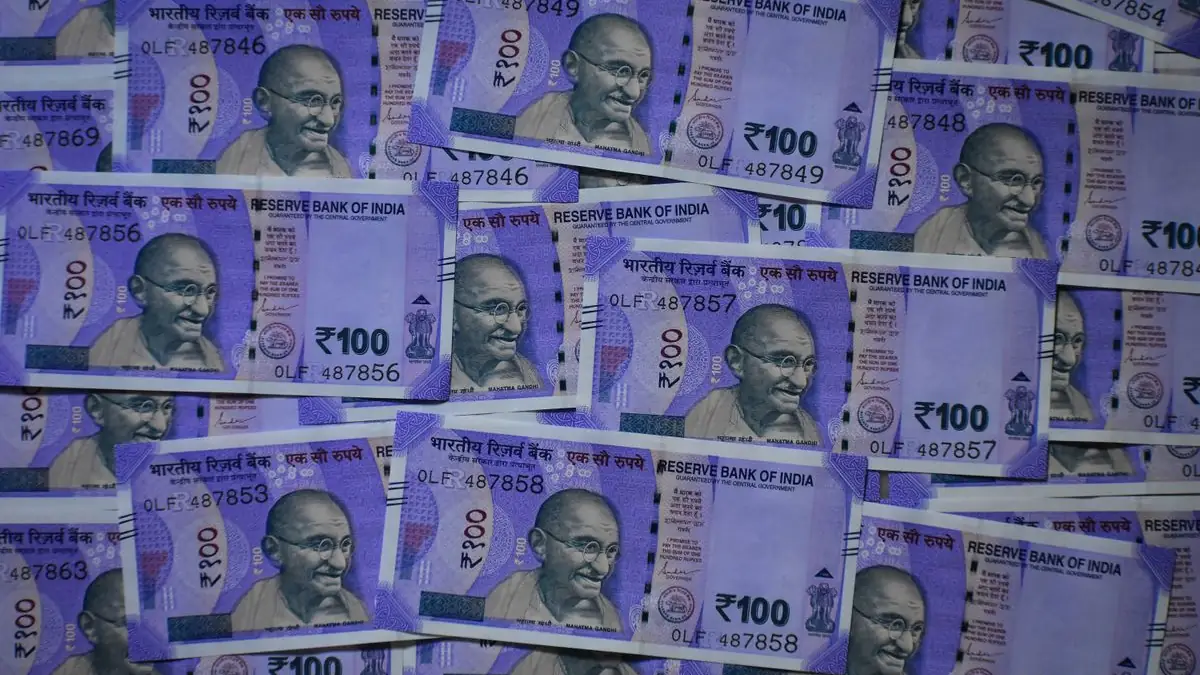
3How the rate works
The conversion itself is one multiplication:
Because of the dollar peg, you can also understand the rate in two steps:
So the SAR to INR rate = the USD to INR rate ÷ 3.75.
Divide the dollar–rupee rate by 3.75 to get the riyal's rupee value. When the dollar moves, the riyal's rupee value moves with it — always check the live converter for the rate today.
What moves the dollar-rupee rate? The big drivers are the difference between US and Indian interest rates, India's trade balance, oil prices (India imports most of its oil), and global appetite for risk — when investors get nervous, money flows into dollars and the rupee weakens. None of these is predictable day to day, which is why timing a transfer perfectly is mostly luck.
4A short history of the riyal and the rupee
The Saudi riyal's defining fact is its peg. Since 1986 the riyal has been fixed to the US dollar at 3.75 riyals per dollar, and it has not moved since. That means the SAR to INR rate is really the USD to INR rate divided by 3.75 — when the rupee weakens against the dollar, it weakens against the riyal by the same amount.
The Indian rupee has a much longer story. Its name comes from the Sanskrit rupya, silver, and the coin was standardised by Sher Shah Suri in the 1540s. India decimalised it in 1957, and after the 1991 reforms it floated against the dollar, which is when the modern exchange-rate era began.
The pair exists because of people. Millions of Indians work in Saudi Arabia — in construction, driving, healthcare, and offices — and send a large share of their pay home every month. For their families, the SAR to INR rate decides how far a month's wages stretch, which is why even a one-rupee move matters on a typical transfer.
5Common mistakes
- Using an old rate. A rate from last month — or last week — can be off by enough to matter on a large transfer. Always check the live rate on the day you send.
- Comparing only the fee, not the rate. A transfer service with zero fees but a poor exchange rate is often more expensive than one with a fee and a good rate. The rate is where the real money hides.
- Forgetting the receiving bank's cut. Some Indian banks charge for incoming international transfers or convert at their own rate. Ask what will actually land in the account.
- Sending small amounts often. Fixed fees hurt most on small transfers. Sending a larger amount less often usually costs less in total — as long as the money is not needed urgently at home.
6Tips for sending money home
First, compare the total cost — fee plus exchange rate — across two or three services before every large transfer, not just the first time. Rates and fees change, and the cheapest service last year may not be the cheapest today. Second, avoid airport and hotel exchange counters, which consistently offer the worst rates; use a bank or a regulated transfer service instead.
Third, if you send money every month, consider whether your employer's bank or a service with a regular-transfer plan offers a better rate for repeat transfers. And finally, keep records of every transfer — the amounts, the rates, and the confirmations — because remittance records are useful for tax and for proving the source of funds if your family makes a large purchase in India.
It also helps to understand what a small move in the rate is worth to you. The SAR to INR rate usually moves a fraction of a percent in a day, but on a large transfer even a fraction matters. On a transfer of 10,000 riyals, a 1% move in the rate changes the rupees received by about 1% of the total — several thousand rupees. That is why the rate is worth checking on the day you send, even if you send every month and the rate looks familiar. A quick check takes ten seconds; the difference can pay for a family's weekly groceries.
For families receiving the money, it is worth agreeing on a simple routine: the sender shares the transfer confirmation and the expected rupee amount, and the receiver confirms what actually arrived. If the two numbers differ by more than a small margin, something went wrong — a fee, a poor rate, or a delay — and it is far easier to fix it on the day than a month later when the trail has gone cold. Keeping a shared note of each transfer, with the date, amount and rate, also builds a useful record for tax time and for any large purchase the family makes with the money.

Try the free SAR to INR Converter
Use the sar to inr converter right now — free, no signup, and your numbers never leave your browser.
Try the free SAR to INR Converter100% free · No account · Private by Qevryn
| How the peg works | The detail |
|---|---|
| 1 US dollar | 3.75 riyals — fixed since 1986 |
| SAR to INR rate | The USD to INR rate ÷ 3.75 |
| Why it moves daily | The rupee floats against the dollar while the riyal is pegged to it |
| On 10,000 riyals | A 1% move changes the rupees received by about 1% — several thousand rupees |
7Frequently asked questions
How many rupees is 1 Saudi riyal?
It changes daily because the rupee floats against the dollar, and the riyal is pegged to the dollar at 3.75 per dollar. Check the live converter for today's rate — never rely on a fixed figure.
Why is the riyal pegged to the dollar?
Saudi Arabia fixed the riyal at 3.75 per US dollar in 1986 to give its oil-based economy a stable currency. The peg has held ever since, so the riyal moves with the dollar.
What is the cheapest way to send money from Saudi Arabia to India?
Compare the total cost — transfer fee plus exchange rate — across banks and regulated transfer services. The cheapest option changes over time, and a zero-fee service with a bad rate is often the most expensive.
Do I pay tax on money sent to India?
Remittances to family in India are generally not taxed as income for the receiver in India, but large transfers can attract attention from tax authorities, so keep records. Tax rules change — check the current rules or ask a tax adviser.
How long does a SAR to INR transfer take?
Most bank and transfer-service remittances arrive within a few hours to two working days. The exact time depends on the service, the amount, and whether the transfer is sent on a working day.
Can I use this converter for a salary comparison?
Yes — enter your Saudi salary in riyals to see its rupee value at today's rate. Remember that the cost of living differs between the two countries, so the same money buys different things in each.
iLoveUnit is a Qevryn product — free, private, no signup.
Keep exploring
These tools go well with the sar to inr converter:
Related guides
More step-by-step guides on this topic: