
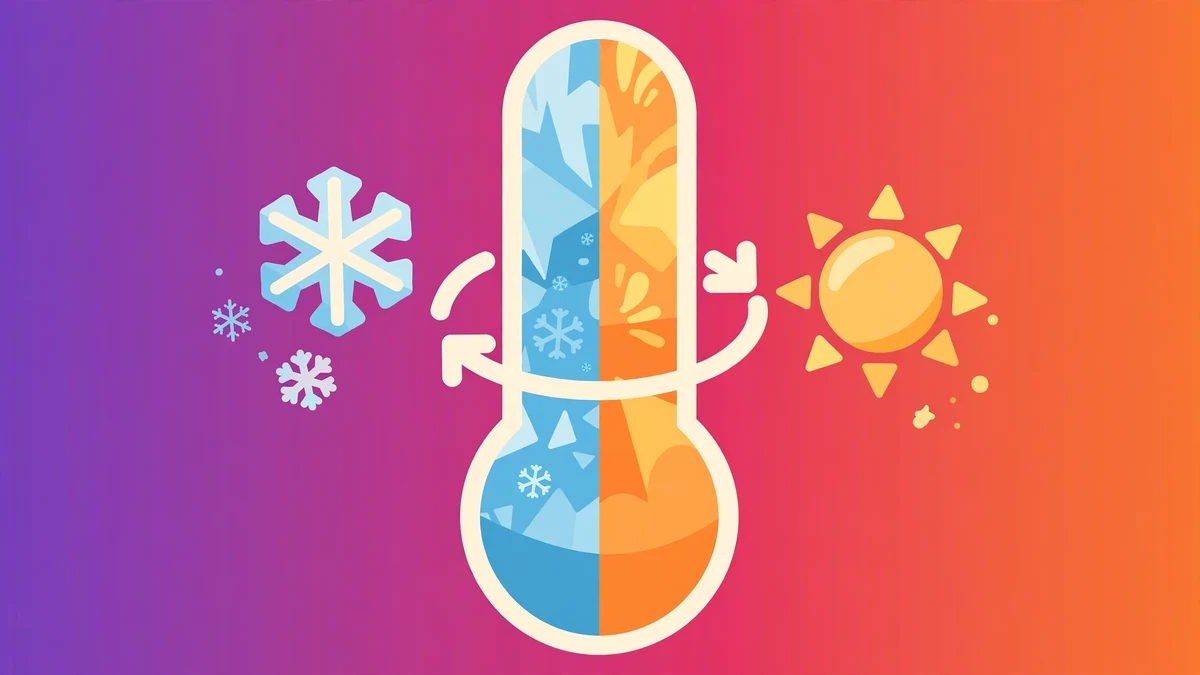
What you can do with this tool
- Read a weather forecast from another country: turn Celsius into Fahrenheit you can feel.
- Check a fever properly: convert a Celsius reading so you know where you stand.
- Follow a foreign recipe: set the oven to the right temperature in your own scale.
- Make sense of a science or tech spec: switch scales when the numbers come in the other one.
It takes seconds — and the rest of this guide shows you the simple maths behind the switch.
Use the free Celsius to Fahrenheit Converter: type any Celsius temperature and get the exact Fahrenheit instantly — open the converter →
📌 Key takeaways
- The formula: °F = (°C × 9/5) + 32 — multiply by 9/5, then add 32. Going back: °C = (°F − 32) × 5/9.
- Three numbers to remember: 0°C = 32°F (water freezes), 37°C = 98.6°F (body temperature), 100°C = 212°F (water boils).
- A fever starts at about 38°C — and 39°C is 102.2°F, a high fever worth calling a doctor about.
- Celsius is the everyday scale almost everywhere except the US — weather, cooking and science outside America all run on it.
🌡 Celsius to Fahrenheit — at a glance
The key numbers from this guide, in one place.
1What are Celsius and Fahrenheit?
Celsius (°C) is the temperature scale used by almost every country on Earth. Water freezes at 0°C and boils at 100°C at sea level — neat, round numbers, which is why scientists and most of the world use it.
Fahrenheit (°F) is the scale used in the United States and a few other places. Water freezes at 32°F and boils at 212°F. It was built around a brine solution and body temperature back in the 1700s, so its anchor points look random today — but for everyday weather, its degrees are smaller, which some people find gives a finer feel for the day.
The two scales do not just start at different points; their degrees are different sizes too. One Celsius degree equals 1.8 Fahrenheit degrees. That is why converting needs both a multiplication and an addition, and why a quick guess can be badly wrong.
2How to use the Celsius to Fahrenheit converter
It takes about five seconds:
- Type the Celsius temperature into the box — decimals and negatives both work.
- Read the Fahrenheit result instantly. The converter updates as you type.
- Flip it if you need Fahrenheit to Celsius — the same page converts both ways.
Use it for weather ("the forecast says 30°C — what is that in Fahrenheit?"), recipes ("bake at 180°C — what is that in my American oven?"), and travel. If you are moving to the US or hosting American guests, this page will save you a dozen confused conversations.
3The formula — with a worked example
To go from Celsius to Fahrenheit, multiply by 9/5 (or 1.8) and add 32:
25 × 9/5 = 45. Then 45 + 32 = 77°F.
So a pleasant 25°C day is 77°F — warm, not freezing.
The reverse formula is just as simple:
One fun fact: the two scales meet at −40, the one temperature where Celsius and Fahrenheit are equal. −40°C is −40°F. It is the only point where you never need to convert.
4A short history of the Celsius scale
Anders Celsius, a Swedish astronomer, proposed his scale in 1742. He put 0° at the boiling point of water and 100° at the freezing point — the opposite of what we use today. After his death, other scientists flipped the scale, and the modern form, 0° freezing and 100° boiling, took over.
Celsius’ scale won because it was simple: a hundred degrees between water’s two landmarks, and a neat fit with the metric system that France was building at the same time. By the 1900s it was the everyday scale almost everywhere in the world.
Fahrenheit, invented by Daniel Gabriel Fahrenheit in 1714, held on in the United States and a few other places. The two scales meet at exactly one temperature: −40° is −40° in both, the only point where Celsius and Fahrenheit agree.
5Everyday temperatures in both scales
| What it is | °C | °F |
|---|---|---|
| Freezing point of water | 0 | 32 |
| A cold winter day | −10 | 14 |
| Fridge temperature | 4 | 39 |
| Room temperature | 20 | 68 |
| A warm day | 25 | 77 |
| A hot day | 35 | 95 |
| Human body temperature | 37 | 98.6 |
| Baking a cake | 180 | 356 |
| Boiling point of water | 100 | 212 |
Memorise three anchors and you will rarely need the converter: 0°C is 32°F (freezing), 20°C is 68°F (room temperature), and 37°C is 98.6°F (body temperature). Everything else sits between or beyond those.
6Mistakes people make with temperature conversion
- Adding 32 before multiplying. The order matters: multiply first, then add 32. Doing it backwards gives a wrong answer every time.
- Using 2 instead of 1.8. Doubling is a shortcut, not the formula — it overshoots by a few degrees, which is fine for weather but not for cooking or science.
- Forgetting that Fahrenheit degrees are smaller. A change of 10°F is only about 5.5°C. So "10 degrees warmer" means very different things on the two scales.
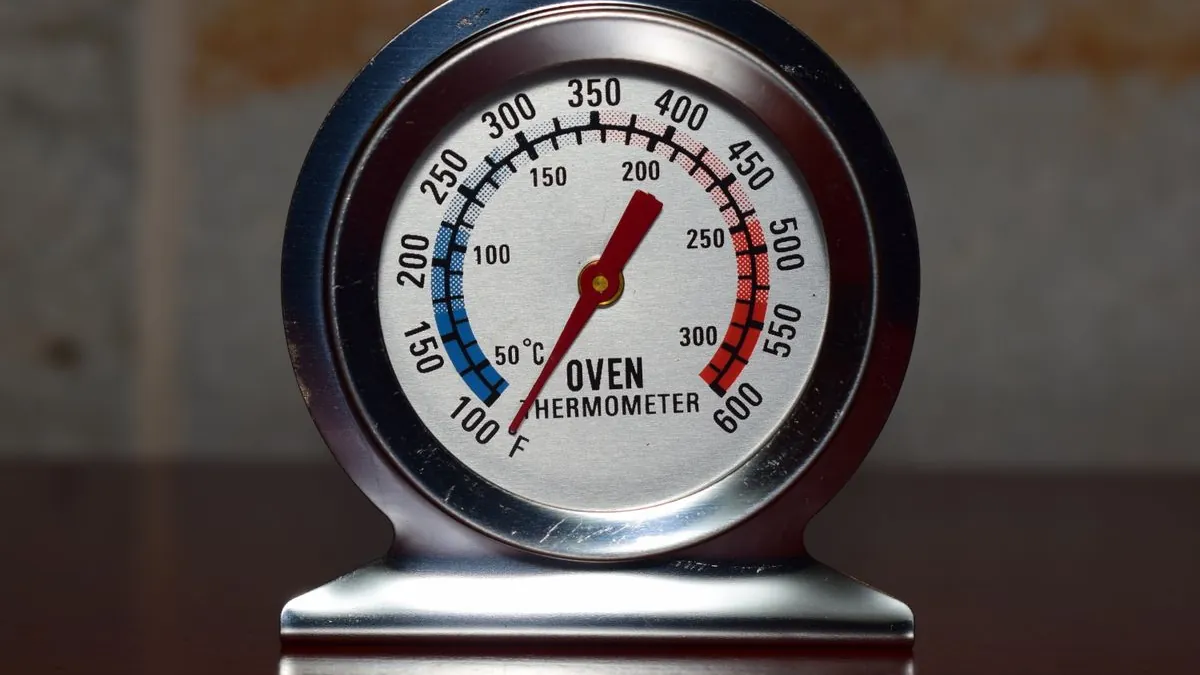
- Trusting oven dials blindly. Many ovens run 10–20 degrees off their setting. If a recipe fails, check the oven with a thermometer before blaming the conversion.
7Celsius around the world: weather, cooking and science
Celsius is the world's temperature language, and it shows up in places you might not expect. Weather forecasts in almost every country quote Celsius, so a forecast of 30°C means a hot day in Paris, Sydney and Karachi alike. News about heatwaves, cold snaps and climate records is reported in Celsius worldwide — when you hear that a place hit 40°C, that is 104°F, a temperature where outdoor work becomes dangerous.
In the kitchen, Celsius is the standard for ovens outside the US. A recipe that says bake at 180°C means a moderate oven; 200°C is hot; 160°C is slow. Bread bakes around 220°C, cakes around 180°C, and slow roasts around 150°C. If you are used to Fahrenheit, those numbers look small — 180 sounds like a cool oven — but remember that the Celsius scale is compressed: the whole cooking range from a slow oven to a hot one spans only about 100 degrees.
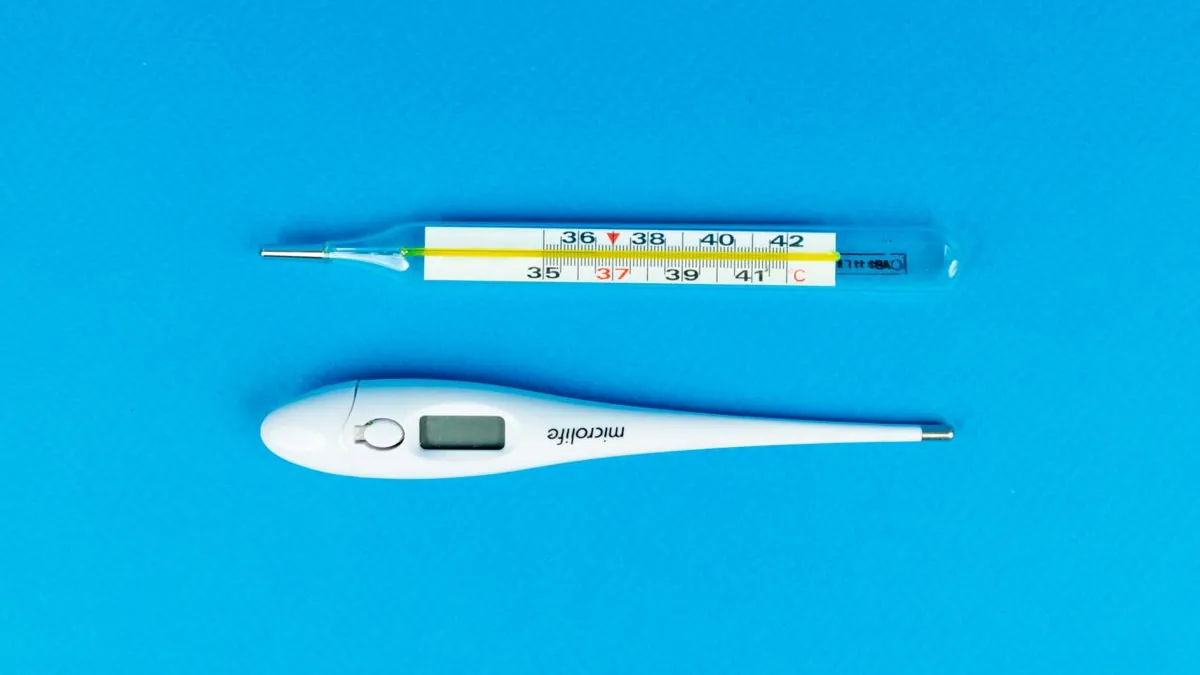
Science runs entirely on Celsius (and its cousin Kelvin, which starts at absolute zero). Water freezes at 0°C and boils at 100°C, body temperature is 37°C, and a fever starts at about 38°C. Medical thermometers outside the US read in Celsius, so a reading of 39°C means a high fever — the equivalent of 102.2°F — and a reason to call a doctor. Knowing that 38°C is the fever line is genuinely useful for any parent.
The trick to thinking in Celsius is to stop converting and start associating. Link 0°C to ice, 10°C to a jacket, 20°C to a T-shirt, 30°C to heat, and 37°C to your body. Within a few weeks of checking the forecast in Celsius, those anchors become automatic, and you will not need the converter for weather at all — just for the oven and the occasional recipe.
8Cooking with Celsius: oven temperatures
Ovens are where Celsius conversions matter most, because a wrong temperature ruins food in a way a wrong weather guess never will. The standard baking temperature in most of the world is 180°C — a moderate oven, right for cakes, biscuits and roasts. A slow oven is 150–160°C, good for meringues and slow cooking. A hot oven is 200–220°C, for bread and pizza. And a very hot oven, 230°C and above, is for roasting vegetables and finishing a roast.
American recipes use Fahrenheit for the same jobs: 350°F is the standard baking temperature (about 177°C, usually rounded to 180°C), 325°F is a slow oven (165°C), and 400°F is a hot oven (200°C). The numbers look nothing alike, but they describe the same heat. When converting a recipe, round the Celsius figure to the nearest 5 degrees — 350°F becomes 175°C or 180°C, and either works, because ovens vary by that much anyway.
One thing the converter cannot fix is an inaccurate oven. Many ovens run 10–20 degrees hotter or cooler than the dial says, and that matters more than any conversion error. An oven thermometer costs little and tells you the truth: hang it on the middle shelf, preheat, and read the real temperature. If your oven runs hot, set it 10 degrees lower than the recipe says. That one habit improves baking more than any conversion ever will.
9Tips for thinking in both scales
Learn the weather in both. Next time you check the forecast, read it in the other scale too. Within a week, 30°C will feel like 86°F without any maths.
Use the 10-degree steps. Every 10°C is 18°F. So 10°C is 50°F, 20°C is 68°F, 30°C is 86°F. Those three anchors cover most weather on Earth.
For cooking, round to the nearest 25°F. Ovens are not precise, so 180°C as 350°F (instead of 356°F) is what American recipes actually use. The converter gives you the exact number; the recipe rounds it.
Remember −40. It is the one temperature that is the same on both scales, and a handy check: if your conversion gives the same number on both sides anywhere except −40, something went wrong.
Convert Celsius to Fahrenheit — try the free converter
Type any Celsius temperature and get the exact Fahrenheit instantly — weather, ovens, science, whatever you need.
🌡️ Open the Celsius to Fahrenheit Converter100% free · No account · Private by Qevryn
10Frequently asked questions
What is the formula for Celsius to Fahrenheit?
Multiply the Celsius temperature by 9/5 (1.8) and add 32. So °F = (°C × 1.8) + 32. For example, 25°C × 1.8 = 45, plus 32 = 77°F.
What is 25°C in Fahrenheit?
25°C is 77°F — a warm, pleasant day. A quick mental check: double 25 to get 50, add 30 to get 80, which is 3 degrees high but close enough for weather.
What is 100°C in Fahrenheit?
100°C is 212°F — the boiling point of water at sea level on both scales.
Why does the US use Fahrenheit?
The Fahrenheit scale was set in the early 1700s and was standard in the British Empire before Celsius took over elsewhere. The US kept it, so Americans still use it for weather, cooking and thermostats.
Is 0°C the same as 0°F?
No. 0°C is 32°F — the freezing point of water. 0°F is −17.8°C, a bitterly cold day. The two scales only meet at −40.
How do I convert Fahrenheit to Celsius?
Subtract 32, then multiply by 5/9. So °C = (°F − 32) × 5/9. For example, 77°F minus 32 is 45, times 5/9 is 25°C.
iLoveUnit is a Qevryn product — free, private, no signup.
Keep exploring
Temperature is one conversion travellers need constantly. These are the others: